Choosing the Right Dog

So you want to get a dog
How do you go about selecting a dog?

Knowing why you want a dog can help you figure out the kind of dog that best meets your needs.

Dog experts, including world-famous dog whisperer Cesar Millan, suggest you know your needs before selecting a dog. Take our quiz to find out if you’re really ready to get a dog.

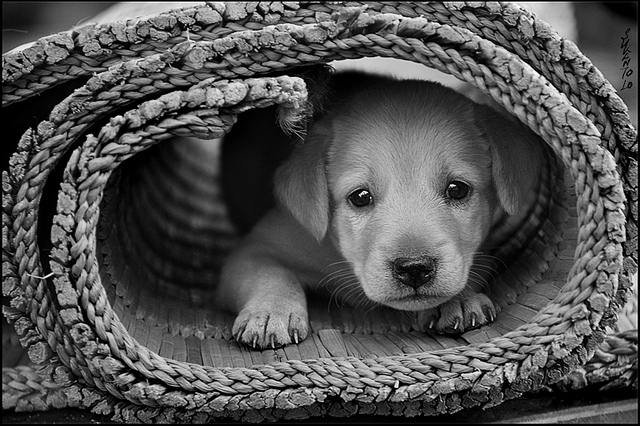
black lab puppy

Choosing A Dog
If you’re really ready to get a dog, your next step is to decide the type of dog you want. Do you want a puppy, an adolescent dog, an adult dog, or a senior dog? Do you want a specific breed, a purebred, or a mutt? Are you looking for a particular type of personality or temperament? Do you want a non-allergenic or non-shedding dog? Do you want a dog that has a specific look? Selecting a dog is a complex business.

Your lifestyle plays an important role in choosing a dog, as do the characteristics of specific dogs and breeds. Be patient, it can take some time to determine what kind of dog you want, research different veterinarians, breeders, adoption options, and training facilities. Even then, you may have to wait for the perfect dog for you to appear.

But don’t worry, it’ll be worth it! In the end, you should have a happy, healthy, dog that you’ll enjoy living with for years to come.

Your lifestyle 
The way you live your life and your personality play a key role in choosing the right type of dog for you. Some key questions can help you determine what you want when you’re choosing a dog:

  • Do you live in on an acreage, in a house, or an apartment?
  • Do you have a fenced back yard? Is it large enough for the type of dog you want?
  • Do you live in an inner-city area, the suburbs, or in a rural area?
  • Can you spend a great deal of time with your dog?
  • Do you live with other people, especially children? Choosing the best dog breed for children is an especially tough task.
  • Are you selecting a dog for a specific purpose, such as herding sheep, or guarding your house?
  • What is your budget for keeping your dog healthy?

Choosing a puppy can be more expensive than an adult dog.

Dog Size 
A dog’s size is an important consideration when choosing a dog. If you have a small city apartment, you may want to think about selecting a dog that is small or tiny, rather than a larger dog or a giant dog breed.

If you want a dog that will cuddle on your lap, a 30 pound dog may be as large as you want. If you’re looking for a dog to do a lot of running, hiking and camping, you’ll probably want to consider medium or larger dogs.

If you have a large home, with a large yard, and are able to give the dog lots of exercise, selecting a dog that’s larger may be a good choice. If you have small children, you may want to consider that a larger dog may be able to bowl them over and hurt them.


Transportation is also something to think about. You probably won’t want to get an overly large dog like a Saint Bernard if you drive a tiny compact car.

Trainability
Some dog breeds are notoriously more difficult to train than others. If you don’t have the time or inclination for training dog breeds that are stubborn or difficult, you should consider a selecting a dog that is more docile and easily trainable.

Active Dog or Couch Potato? 
The activity of dog breeds varies tremendously. There are dogs that are nothing more than furry couch potatoes and that are perfectly happy to go outside and walk for only a short time every day.

Other dog breeds are much more active – they seem like they’re permanently wired on about ten cups of coffee, and need enormous amounts of exercise, mental stimulation, and attention. Most dogs fall somewhere in between, and need an hour or two of solid exercise each day.

Adult Dog, Puppy, or Senior?
One of the key decisions you’ll make when selecting a dog is the age of the dog. Do you want an adult dog or a puppy? When we think about choosing a dog, most people automatically think of choosing a cute puppy from a litter. Sure, puppies are absolutely adorable, but they are a lot of work.

If you don’t want to go through the trials of housebreaking and chewed shoes, adopting an adult dog can be a great choice. Don’t discount a senior dog that may have a few great years to give you!

Male or Female Dog
Dog owners tend to have pretty strong feelings about selecting a dog based on gender. Many owners feel that female dogs are more docile, while males are more aggressive. On the other hand, some owners feel that males are more protective and playful. Generally, these are pretty broad generalizations that tend not to hold true. Deciding if you want a male or female dog is a pretty complex issue.

A Purebred or a Mutt
The benefits of purebreds and mutts (mixed breeds) can be a controversial topic among dog lovers, and you’ll run into people prepared to swear to their death that either purebreds, or mixed breeds, are the best choice.

Purebred devotees swear by the reliability of a purebred’s temperament and physical characteristics. Similarly, mixed breed, or mutt, lovers often swear by their dog’s wonderful personality and gorgeous looks.

While both purebred dogs and mixed breeds both have advantages, the key thing to remember is that all dogs are individuals. You can take any purebred and any mixed breed, at random, stand them side-by-side, and either one could be more attractive, intelligent, a better family pet, or healthier. Selecting a dog based on the individual dog’s personality is probably the best tactic.

At the same time, in general terms, there are some interesting comparisons between purebred and mixed breed dogs. Just remember that these are only generalizations, and that all dogs are individuals first.

Learn more about choosing the perfect dog in my book, Choosing a Happy, Healthy Puppy.

The Puppy Mill Song: A Serious Message In A Cute Package

At Happy Healthy Puppy, we work hard to make sure that we get the message across loud and clear: never buy a puppy that came from a puppy mill.

The San Francisco SPCA and the Jullien Brothers and BBDO San Francisco have created a sweet and informative video about why you should never buy a puppy from a puppy mill.

Read more »

Click here for more...

Photo: Gorgeous Black Lab

Time for our cute dog fix! This guy’s a beautiful black Labrador.

Labs make great family pets, as they’re often even tempered, happy and good with kids. They can be quite high energy though, especially lab puppies.

They’re not the best dog for houses full of china or fine antiques just waiting to get broken.

Read more »

Click here for more...

Thinking about Buying a Puppy?

Most people spend more time choosing their next car than deciding on the right breed and dog for them.

People keep their cars only a handful of years before trading them in, but a dog can be with you for well over a decade. The dog also sleeps in your house, is a companion to your children, and becomes a close member of your family. As such, buying a puppy should be weighed much more carefully than the decision to buy a car.

An adorable puppy is heartbreakingly cute and cuddly, but requires an incredible investment in time and money for many years. New pet owners commonly underestimate the energy and money needed to socialize and train a dog when they decide they want to buy a puppy.

Read more »

Click here for more...

Nonshedding Dog Breeds

Is your dog’s shedding a problem? Want to reduce the dog hair on your sofa and car seats? There may be a bit of hope, as there are quite a few non shedding dogs.

While the idea of non shedding dogs is appealing, most non shedding dog breeds are just breeds that tend to shed less than others. Many of these breeds have less of a undercoat, shorter fur, or fur that’s less bulky and dense.

That said, some Terrier breeds, Schnauzers, and Poodles shed less than other breeds.

Read more »

Click here for more...

Dogs for Adoption

There are numerous ways to adopt a dog. Breeders, Puppy Mills, Classifieds, Pet Stores, Adoption Centers, friends and relatives, etc. It is up to you to decide from where you want to buy one.

After doing a lot of research into Puppy Mills (most Pet Stores use them) we recommend to sticking with reputable breeders and adoption centers (such as shelters and the SPCA).

Read more »

Click here for more...

Inherited Cardiovascular and Nervous Disorders in Mixed Breed Dogs

It can be extremely difficult to tell if a mixed breed dog has a genetic tendency to develop a cardiovascular or nervous disorder. This is because most owners don’t know the exact breed makeup of their mixed breed, and genetic disorders are well linked to specific breeds.

Today, mixed breed Dog DNA tests can help erase that inequality. Mixed breed dog DNA tests can determine a mixed breed dog has a purebred parent or grandparent. Once you know the purebred makeup of your dog, your vet can determine if your dog is at risk of inheritied genetic disorders.

Read more »

Click here for more...

Genetic Gastrointestinal Disorders in Mixed Breed Dogs

Knowing the risk of developing a gastrointestinal disorder is relatively easy for a purebred dog. The risk of genetic gastrointestinal disorders is well understood for many breeds.

However, the risk of a gastrointestinal disorder for a mixed breed dog is hard to determine, since the exact breeds that make up a mixed breed dog aren’t often known.

However, mixed breed Dog DNA tests now provide a way to find out the breeds that make up a mixed breed. Once a dog’s parents or grandparents breeds are known, a vet can determine if a mixed breed may be at risk of a genetic gastrointestinal disorder.

Read more »

Click here for more...

Puppy Mills

Don’t necessarily believe a pet store if they tell you that their puppies don’t come from a puppy mill. Pet store employees are not always well trained to spot signs of abuse and mistreatment seen in puppy mills.

Often, pet store owners and managers and their staff don’t know the conditions that their pets are bred in. Sadly, the cold reality of many puppy mills is that dogs in puppy mills are often kept in small cages, fed as little as needed to keep them alive, denied adequate medical care, and receive little or no positive human attention.

The parents are seen as breeding machines to create as much profit as possible. Many female breeding dogs are euthanized as soon as they stop producing enough puppies. The puppies are seen as little products, and given only what is needed to get them shipped to a store where they can bring in money.

Read more »

Click here for more...

Genetic Disorders in Mixed Breed Dogs

If your dog has a purebred ancestor, it may be susceptable to genetic disorders specific to purebreds. A mixed breed dog with a purebred ancestor can inherit a genetic disorder from its purebred parent or grandparent.

Unfortunately, owners of mixed breed dogs often have no idea if their dog is at risk of a genetic disorder. Until very recently, there was no way owners of mixed breeds could determine if their dog’s parents were purebreds (other than finding out directly who the parents were). Unfortunately, many dog owners have no information on the parents of their dog.

In the past couple of years, mixed breed Dog DNA tests have come on the market that can help you determine if your dog has a purebred parent or grandparent. Knowing your dog’s purebred ancestry can help you to determine if your dog is at risk of an inheritied genetic disorder.

Read more »

Click here for more...

You’ve Decided on a Purebred

Congratulations! A purebred dog can be a wonderful companion and friend. Purebreds have highly predictable physical characteristics and behaviours, so you won’t need to spend a long time searching for perfect combination.

The first thing to do is to decide on a breed of purebred dog. Even if you have a good idea of the breed you’re interested in, taking a little time to do some research can help ensure that you’ve made the right choice.

Read more »

Click here for more...